
Reverse geocoding
Obtain postal addresses from objects in the drawing
Get data like street, municipality, postal code, etc. and add it to existing objects.
Get the postal addresses of features in the map
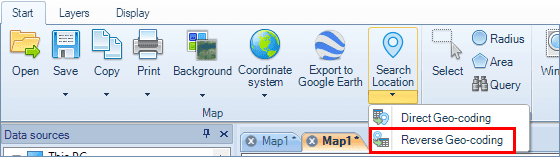
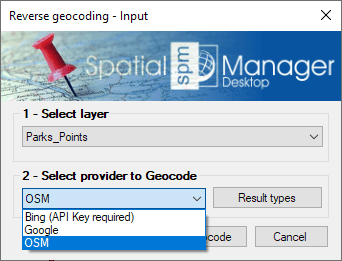
Spatial Manager Desktop™ includes the ‘Reverse geocoding’ function that allows you to obtain the postal addresses of the features in a map layer through a Geocode provider (Google, Bing, OpenStreetMap). All that you need is to select the map layer to be geocoded, choose the provider to geocode from the list, and, optionally, choose the result types (which depend on the results returned by each provider).
Notes:
- Certain location service providers (such as Google or Bing) may require special terms of use for the users of this service. You can configure any special setting for such providers through the Service Provider API Keys.
- If you select a large number of features to geocode, the application will warn you that this operation may involve high data consumption depending on the geocoding provider chosen.
- Note that if you select non-point features to geocode (such as polygons, polylines, etc.) the results may be inaccurate depending on the shapes of these features. For example, for polygonal features (such as parcels, zones, etc.) the centroid of the features will be chosen to calculate their postal address, which may be inaccurate if the shape of these polygons causes the centroid to be outside the polygon or away from the appropriate postal address.
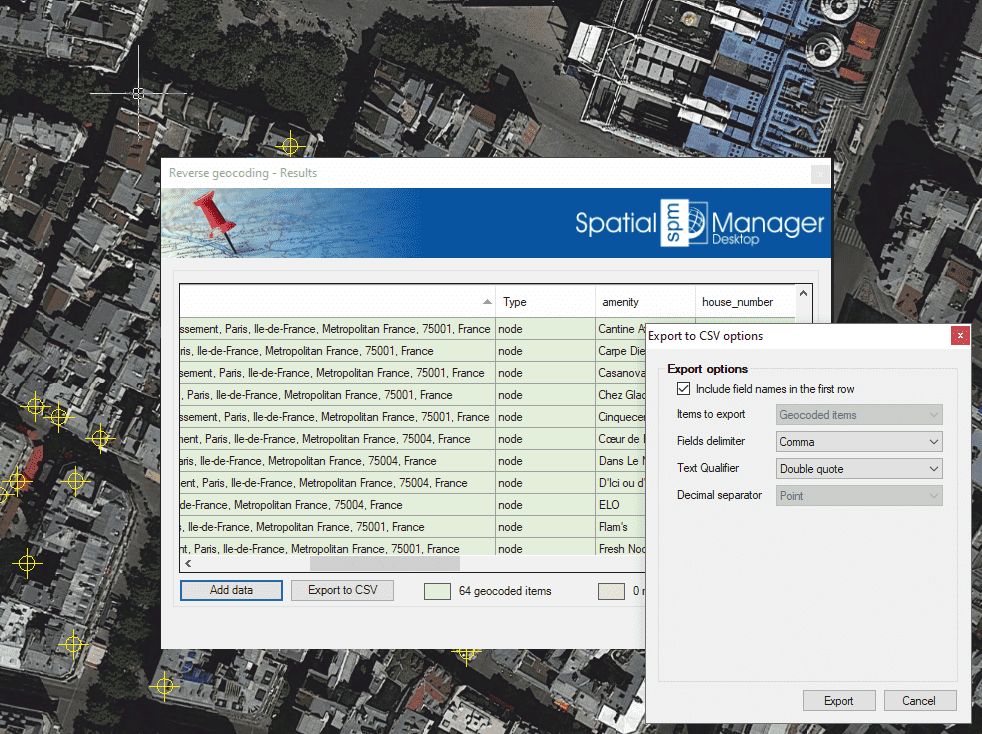
Once the reverse geocoding process is finished, you will get a results table including all the fields returned by the chosen geocoding service. Those addresses that could not be geocoded (may be due to insufficient or inconclusive data) are shown in a different color. From the results of the table, you can:
- Add data: To add the geocoding data to other existing feature data.
- Export the table to a CSV file: Select the exporting to CSV parameters (delimiter, separator, etc.). You can also opt to omit in the exported CSV the addresses that have not been geocoded.*
Disclaimer:
- Some components shown here (providers, names, window styles, etc.) may differ slightly from those on your computer.
- Certain features require Internet access. If you experience issues, check with your network administrator about a possible Proxy server. You can configure the Proxy settings in the application options.
- Some geographic data providers (Geocode, image maps, etc.) may require a user account, which you can set up in the Service Provider API Keys section of the application options.